
We notice that you studied Physics at university. How did you go from that to what you are doing now?
I’d have done an English degree too if I’d had the time. I’ve always been on that cusp between art and science, could never quite make up my mind to go for one or the other. That probably explains why I’ve ended up gravitating towards the games industry, where I can indulge my passions for storytelling, visual design, logic, physics and maths all at once.
What attracted you to graphic novels? What do they give writers and readers that traditional books don’t?
If you look at it from a practical point of view, some stories are easier to tell visually. Like if you are creating a completely new world without any real-world references – Avatar, say. If you did that as a novel you’d have to bombard the reader with great chunks of descriptive prose – ugh. At the same time, you might not want to do it as a movie because your story needs more space and depth than you can fit into two hours. Or, of course, you might not have a quarter of a billion dollars to spend.
In fact, though, I never think it through in that kind of detail. You just start working on a story and you either feel it’s right for prose or you start blocking it out in comic panels in your head. Your muse decides for you whether it’s going to be a graphic novel.
As for what graphic novels have that traditional books don’t – well, what does painting have that music doesn’t? They’re different, both equally to be cherished as modes of expression.
Do you have a favourite graphic novel? If so, why?
Wow – I wouldn’t know where to start, I read so many. I like the works of Daniel Clowes, Adrian Tomine, Alison Bechdel, Posy Simmonds, Matt Kindt, Alan Moore… A bunch of diverse comics creators who don’t have anything much in common, except that they rarely disappoint.
If I’m going to pick my desert island read it’d be Neil Gaiman’s tour-de-force run on The Sandman. That’s an opus of around 1500 pages, so if you want to dip in, start with the collections Dream Country and Fables and Reflections.
Do you think graphic novels are taken seriously enough as a form of literature?
Not in the UK, that’s for sure. Here, a graphic novel has to be freighted with literary significance for critics to get past their aversion to the medium. Like, I was looking at the Guardian yesterday and they had a full-page review of Chris Ware’s latest graphic novel. Now, I’m not disrespecting Ware’s work – he’s very talented, and I like that comics are a rich, broad tapestry with room for all kinds of story. But as Wiki says, “His works explore themes of social isolation, emotional torment and depression.” And that’s why the Guardian will review him and wouldn’t touch 300, say. UK critics don’t know how to read comics; they don’t have a cultural lineage to fit them into. So they view them with the classic cocktail of fear, loathing and fascination. And so the only graphic novels they review seriously are the ones that fit really in an illustrated literary tradition rather than being unashamedly comics.
I don’t want to get too parochial about this because all writers work internationally these days, but Britain punches way above its weight in comics. You’ve got Gaiman, Moore, Ellis, Millar, Ennis, Quitely – too many to list, and many of them among the most successful in the profession. But they’re all working mostly outside the UK because comics here are barely a cottage industry. And the problem with that is it makes it difficult to get a British voice and sensibility across in comics. Those writers and artists have all had to adapt their style to the American market to some extent.
It’s very different in France, where four out of every ten books sold are graphic novels. You can go to a bande dessinée convention and you’ve got whole families there – kids, teens, parents, all reading graphic novels. And because of that there’s a nicely diverse range of genres: thrillers, rom-com, whodunits, science fiction. It’s not all superheroes and zombies.
You often work in collaboration with other writers and artists, what do you enjoy about these collaborations and what do you find more challenging? Has there been a collaboration that has been particularly interesting for you?
Actually, the truth is that my name may be alongside somebody else’s on the cover, but I rarely collaborate that closely. I’ve worked on a lot of series where I’ve split the writing chores with partners, but we usually have a quick consultation and then get stuck into our own individual books.
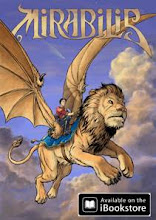
Comics like Mirabilis are the exception. Those are interesting precisely because the creative collaboration is so challenging. For example, I grew up on movies and Marvel comics, so all my layouts for Mirabilis are informed by that. But the penciller, Leo Hartas, is more influenced by illustrated books and European stuff like Tintin and The Beano. So sometimes it feels like we’re coming from opposite ends of the spectrum. I go for sexy, dark, dramatic with close ups, upshots and wide angles; he goes for funny, sweet, diagrammatic with medium shots, flat/diorama staging, and so on. But that cycle of thesis, antithesis, synthesis can throw up some nice creative surprises, I think.
A lot of your work makes literature an active experience, and puts the reader in charge. What do you hope to achieve by giving the reader a central part?
Only what any writer wants – a connection. An emotional reaction. That’s why the interactivity in Frankenstein isn’t about solving the plot, it’s about the relationship you develop with Victor and his creature. The choices you make affect their degree of empathy, alienation and – most importantly – the extent to which they trust you. That affects how much of himself Victor will reveal to you, for instance. Whether it works or not is up to readers to judge, but I think there’s never been a book anything like it before – and it’s nice when an author gets to say that.
It’s true that I’m interested in ways to make story worlds that people can interact with to discover or create their own narratives. But I think videogames are a better place to do that than interactive literature. I’m just using books (book apps, that is) as a test-bed to try out some ideas first.
Do you think it is difficult to adapt such a well-established story? Has it been well received?
Very well received, especially among younger readers (I mean teen and up) who probably wouldn’t crack open a 200-year-old novel if they’re not doing an Eng Lit course. Frankenstein is one of the modern world’s defining myths, a story that everyone thinks they know but one that is rarely read in the original. I hope my version will encourage more people to take a look at it.
Now the but: it was well received for a book that was only released on iPad and iPhone. I’m working on epub3 and Kindle versions but it was a big mistake not to bring those out at the same time. Lots of people were seeing the reviews (Salon.com had a nice one, incidentally, saying “it may be the best interactive fiction yet” – though admittedly the competition is not fierce) but couldn’t read it because they had Android tablets. But, you know, I don’t get to direct the publishing strategy. Unfortunately.
The adaptation wasn’t hard because, seminal work though Frankenstein is, it’s pretty much the worst classic novel ever written. I should qualify that. Mary Shelley was eighteen years old when she wrote it, and I certainly don’t want anyone seeing my teenage scribblings. On the other hand, she revised it in her thirties and only made it stodgier – and didn’t fix some glaring plot holes. So I felt completely free to take liberties with the text in a way I wouldn’t have done with Austen or the Brontës, say.
The end result is that my version is much more modern. There’s a lot of Mary Shelley’s prose still in there, but I fleshed out the characterization and the relationships as we’d expect in a novel these days, and I went for a pastiche style which feels 19th century in spirit but might flow a little easier to today’s readers. A large part of that is because I cut all Shelley’s travelogue stuff. Boy, she really padded that thing with chunks of a Grand Tour guide book.
Oh, and I set the action in Paris during the Revolution. That’s because Mary Shelley had Victor creating the monster in 1792, but for some reason had him at university in Ingolstadt – which seemed a bit of a waste of a rather wonderfully serendipitous dramatic setting.
Do you see interactive creations such as Frankenstein as the future of the publishing industry?
Not in the slightest! Take Amis writing Time’s Arrow. He didn’t think, “Now all novels will be written backwards.” My version of Frankenstein is an experiment, that’s all. Literature has always been experimenting and always will. But God help us if publishers suddenly start churning out “classics interactive”.
With the growth of the digital publishing industry, how do you think the issue of piracy will be handled?
Publishing is going to have to learn to get along with digital piracy, unless they have a trick up their sleeve that the music industry didn’t. But it’s not all bad news. We need to look at ways to extend the usual revenue model – slipcase editions with extras, for example, and pre-subscribed serials. Digital can be seen as part of the wide mouth of the funnel that draws paying customers in, whether or not they pay for the digital experience itself.
Do you have any exciting plans for the future?
Fabled Lands LLP, my company with Jamie Thomson, Frank Johnson and Tim Gummer, owns the Dark Lord series, co-created by the two of us and written by Jamie, which won the Roald Dahl Prize and has appeared as a comic strip by Dan Boultwood in The Phoenix. And we have a couple of new series that are about ready to go in book form. We tend to use print as a springboard for properties that we want to go on to develop in other media, which is either cynically manipulative or far-sighted depending on how much of a fiction purist you are.
Add to that my ongoing work on Mirabilis – which was conceived as a 260-page graphic novel saga but is growing to more like a target of 800 pages. And I have a long-cherished videogame project for kids that would be built around forging a real relationship with the characters. So I have more exciting projects than I have time to work on them, that’s for sure.
What would be your dream mash-up novel?
I love mash-ups in music. Have you heard the Arcade Fire v Blondie one? Or that sublime moment in The Sopranos where you realize that, yes, they really are crashing the Peter Gunn theme into “Every Breath You Take”. Oh, and as a role-player I have to give an honourable mention to “Roll a D6” even though strictly speaking it’s a cover spoof, not a mash-up.
So I love that stuff, and I think mash-ups like that are a great modern art form. But (sorry) I have to say that mash-up novels aren’t books, they’re just marketing gimmicks. That “this meets that” thing was always just a formula to get the attention of the dumbest guy in the room. Why, if mash-ups work so well in music and art, do they come across so lame in storytelling? (And, yes, I do mean you, Cowboys and Aliens. Or anything "vs" anything, come to that.) You’d think it would be the easiest medium to do a mash-up in. Maybe that’s the problem. It always feels like creativity by numbers.
But I don’t want to end on a negative note, so let’s take a look at some great mash-up movie trailers. Must Love Jaws and 10 Things I Hate About Commandments are over eight years old but they still haven’t been bettered. Sheer genius.






 Posts


